Ipamorelin
Ipamorelin’s selective response and clinical detour
The early experiments solved a problem of hormone selectivity. A later trial asked whether that achievement could help people recover bowel function.
The 1998 selectivity experiments
The adjective that interests me in ipamorelin’s early record is “selective”. In the 1998 characterization in rat pituitary cells, anesthetized rats and conscious swine, the compound released growth hormone while ACTH and cortisol stayed no higher than the response to natural growth hormone-releasing hormone. In the swine experiments that pattern persisted at more than 200-fold the amount producing half the maximum growth-hormone response.
That is impressive discrimination between hormone responses. The experiment’s ambition was also quite specific. It observed an acute response in animals; lasting human benefit and safety would require their own investigations.
Ipamorelin is a synthetic peptide made from five amino acids. It acts at the ghrelin receptor, which normally responds to the body’s hunger hormone. The different receptor used by GHRH analogs explains the interest in combining the two kinds of signal.
“Selective” describes the hormone measurements in these experiments. The animals were rats and pigs.
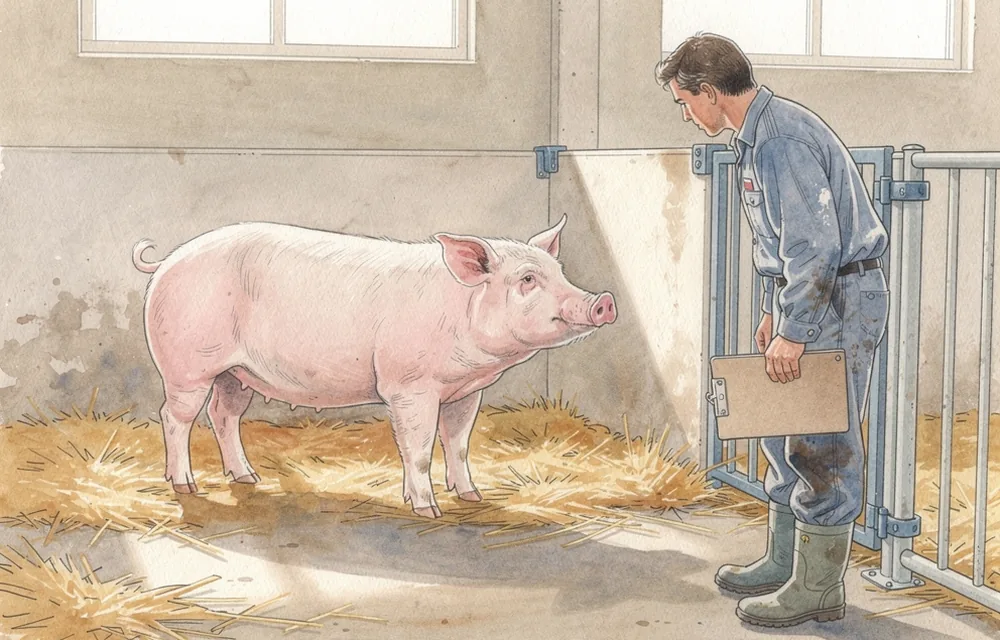
Adults recovering from bowel resection
The clinical task was postoperative ileus, the temporary slowing of the bowel after surgery. In the randomized trial of 114 adults undergoing bowel resection, the median time to a first tolerated meal was 25.3 hours with ipamorelin and 32.6 hours with placebo. The primary endpoint was missed: p=0.15.
Those numbers can look encouraging before the statistical result arrives. I cannot celebrate ipamorelin’s shorter time as a victory when the trial missed its primary endpoint. The test left efficacy unproved for that clinical question.
Treatment was intravenous and lasted up to seven days. Treatment-emergent adverse events were reported in 87.5% of the ipamorelin group and 94.8% of the placebo group. These were events arising during a short postoperative study; those percentages alone do not assign every event to the compound.
The separate blood-level study in healthy male volunteers used intravenous infusions, with eight men per dose level. Its approximately two-hour terminal half-life and growth-hormone peak at about 40 minutes characterize that setting. Published human data have not established the equivalent blood-level profile for subcutaneous ipamorelin.
Ferrets after cisplatin; rat bone measurements
Adult female rats had faster longitudinal bone growth over fifteen days: 42 micrometers per day with vehicle, compared with 44, 50 and 52 micrometers per day at the three studied amounts. Total IGF-1 and bone turnover markers remained unchanged. That mismatch rewards a closer look: the bone measurement moved while several expected blood measurements stood still. Its relevance to human bone health remains a research question.
A 2024 ferret experiment after cisplatin treatment offers another separation. Ipamorelin reduced weight loss by approximately 24% on the final day of the delayed phase, which ran from 48 to 72 hours, while vomiting was unchanged in both the acute and delayed phases. The benefit concerned weight loss in ferrets exposed to chemotherapy. It supplies no human anti-vomiting result.
These experiments make ipamorelin more interesting than its reputation as a generic recovery peptide. They also leave several distinct clinical jobs unfinished.
Safety over a longer interval
The short human record leaves chronic safety unresolved. The 28-day rat cardiovascular study often discussed alongside ipamorelin tested a different ghrelin-receptor agonist. It found heart-muscle degeneration and cell death. That is a class-level warning signal; attributing that injury directly to ipamorelin would misstate the experiment.
The review of growth hormone secretagogues identifies reduced insulin sensitivity and increased blood glucose as a central metabolic concern. Raising growth hormone and IGF-1 also creates a mechanistic concern about existing tumors. No human ipamorelin cancer trial resolves it. Long-term human safety data and Phase 3 efficacy trials remain missing.
Ipamorelin has no approved human use in any country. On FDA’s page current as of April 22, 2026, ipamorelin acetate appears among withdrawn 503A nominations and remains in Category 2 under the 503B interim policy. Category 2 flags significant safety risks and provides no interim allowance under that policy. Withdrawal supplies no finding of safety or authorization to compound. Neither ipamorelin form is on the 503A Bulks List. WADA prohibits ipamorelin at all times in sport.
Sleep, soreness, hunger: community accounts
Community accounts describe deeper sleep, vivid dreams, less training soreness and sometimes a leaner appearance. Other accounts mention flushing, tingling, puffiness, increased hunger, dizziness and irritation at injection sites. These are anecdotal accounts, not clinical evidence; the compound’s identity, purity, concurrent habits and reported changes were unverified.
My hesitation is strongest when an account becomes a timetable or an explanation of cause. The existing human studies measured different things. For the proposed pairing, the CJC-1295/ipamorelin investigation sets out exactly which experiment remains absent.